The hero who slays the serpent: shared poetry across Indo-European
By Vāgṛtam. Published .
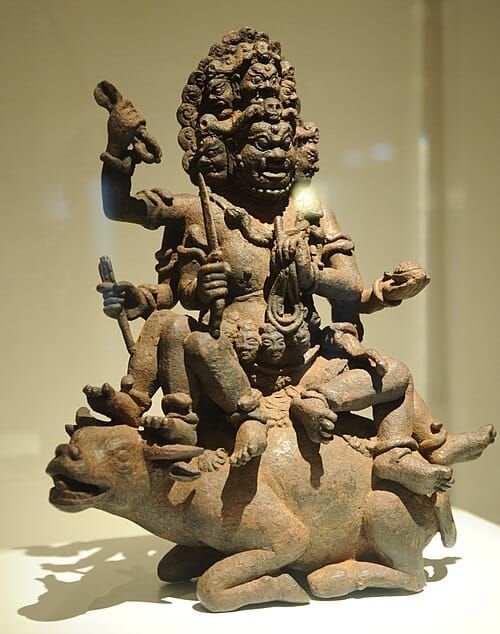
Historical linguistics is a fascinating subject because it doesn’t just tell you that languages are related, it can also recover the shared culture and even the shared poetry that a family of languages carried with it before it split apart. One of the clearest cases of this is a single formula that shows up, almost word for word, in Sanskrit, Avestan, Greek and (more faintly) Balto-Slavic: the hero who slays the serpent.
Before getting to that, it helps to see just how tight the sound correspondences between these languages actually are, because that’s what makes the poetic parallels credible rather than coincidental.
Vedic Sanskrit and Avestan
Here’s a line from the Avesta:
yō yaθa puθrəm taurunəm | haoməm vaṇdaēta maṣ̌iiō | frā ābiiō tanubiiō | haomō vīsāite baēšazāi
Haoma makes himself available to the bodies of the mortal, who loves him like a tender son, for healing
This can be translated phoneme for phoneme into Vedic:
yó yáthā putráṃ táruṇam | sómaṃ vandeta mártyaḥ | prá ābhyás tanū́bhyaḥ | sómo viśāte bheṣajā́ya
This happens here:
- s -> h in Iranian (Sanskrit keeps s): haoma/soma
- Voiced aspirates bh/dh/gh merge into plain b/d/g in Iranian: ābiiō/ābhyás, tanubiiō/tanūbhyaḥ
- Stops before another consonant spirantize (p,t,k -> f,θ,x): puθrəm/putram, frā/pra
- Aspirated stops before a vowel spirantize (th,ph,kh -> θ,f,x): yaθa/yathā
- Old palatovelars split into Skt ś/j/h vs. Av s/z: vīsāite/viśāte
- Cluster -rty- becomes Avestan ṣ̌, stays rty in Sanskrit: maṣ̌iiō/mártyaḥ
- RUKI-conditioned sibilant (š/ṣ) is inherited jointly, not a separate change in either branch: baēšazāi/bheṣajāya
These aren’t one-off resemblances, they’re rules that apply across the whole lexicon, which is why you can take almost any Avestan verse and reconstruct what it looked like in Old Indic and get something that scans and means the same thing. Here’s another:
təm amauuaṇtəm yazatəm | sūrəm dāmōhu səuuištəm | miθrəm yazāi zaoθrābiiō
The mighty champion, the venerable, the strongest of all creatures, Miθra I will worship with sacrificial offerings.
To this, the Vedic corresponds as follows:
tám ámavantaṃ yajatám | śū́raṃ dhā́masu śáviṣṭham | mitráṃ yajai hótrābhyaḥ
And Gāθā verses, too, can be transposed almost word for word into Vedic:
yastā daēuuə̄ṇg aparō maṣ̌iiąscā
In Vedic:
yás téna devā́n áparo mártiyāṃś ca
The syllabic metre remains unchanged in such transpositions, which indicates both of these languages must have descended from a proto-language called Proto-Indo-Iranian.
Sanskrit and Lithuanian show similar connections
A comparison of grammatical forms of the Proto-Indo-European (PIE) word for “son” in Sanskrit and Lithuanian [1]:
| Case | Sanskrit | Lithuanian | PIE |
|---|---|---|---|
| Nominative | sūnus | sūnus | *suHnus |
| Vocative | sūno | sūnau | *suHneu |
| Accusative | sūnum | sūnų | *suHnum |
| Genitive-Ablative | sūnos | sūnaus | *suHnous |
| Dative | sūnave | sūnui | *suHneui |
| Locative | sūnā(u) | sūnuje | *suHnēu |
A comparison of some basic vocabulary between Sanskrit and Lithuanian[1]:
| English meaning | Sanskrit | Lithuanian |
|---|---|---|
| god | devá- | diẽvas |
| goddess | devī | diẽvė |
| man | vīra- | výras |
| husband, lord | pati- | patìs |
| mother | mātár- | mótė |
| son | sūrù- | sūnùs |
| daughter | duhitár | duktē̃ |
| foot (step) | pád- | pãdas |
| horse/mare | áśvā- | ašvà |
| dog | śvā | šuõ |
| sheep | ávi- | avìs |
| fire | agní- | ugnìs |
| day | dína- | dienà |
| sleep | svápna- | sãpnas |
| grain(s) | yáva- | yavaĩ |
| branch | sákhā- | šakà |
| then | tadā́ | tadà |
This is because both Indo-Iranians (Sanskrit and Avestan) and Balto-Slavs (Polish, Lithuanian, and Russian) share deep ancestry from the Corded Ware Culture and were interacting with each other heavily before splitting.[4], [5]
Greek, Avestan, and Sanskrit poetry also share the theme of “fashioning”[1]
| Branch | Word form | Literal meaning | Poetic/metaphorical extension |
|---|---|---|---|
| Greek | τέκτων (téktōn) | carpenter, builder | “fashioner” of poems, cures, or performances (Pindar) |
| Vedic Sanskrit | takṣ- (√takṣ) | to carve, hew, fashion | divine craftsmen (the Ṛbhus) “fashioning” fame, chariots, hymns |
| Avestan | taš- / tašan | to fashion, the Fashioner | Ahura Mazdā as “Fashioner of the Cow,” fashioning ritual formulas |
| Text | Who is “fashioning” | What gets fashioned | Why it matters |
|---|---|---|---|
| Pindar, Pythian 3 | Asclepius / the poet himself | a cure; the poem/song | poet compares his own craft of composing to a healer’s skilled handiwork |
| Rigveda 4.36 | the Ṛbhus (divine artisans) | a chariot swifter than thought; poetic fame itself | craftsmanship and poetic composition are treated as the same act |
| Yasna 29 (Avesta) | Ahura Mazdā / the “Fashioner” | the cow (ritual victim); a sacred formula (mąϑra-) | fashioning is tied to transformation and immortalization through ritual |
Baltic and Slavic carry the same root too, though without the surviving poetic extension: Lithuanian tašau, tašyti “to smooth, hew, work (wood),” and Slavic tesati “to hew” (Old Church Slavonic, Russian тесать), with the tool-noun teslo/tesla “adze.”
| Branch | Word form | Literal meaning |
|---|---|---|
| Greek | τέκτων (téktōn) | carpenter, fashioner |
| Vedic Sanskrit | takṣ- (√takṣ) | to carve, hew, fashion |
| Avestan | taš- / tašan | to fashion, the Fashioner |
| Lithuanian | tašau, tašyti | to hew, smooth (wood) |
| Slavic | tesati | to hew |
The caveat is worth stating plainly: Greek, Vedic, and Avestan all preserve an archaic poetic corpus where “fashioning” gets stretched metaphorically onto fame, cures, hymns. Lithuanian and Slavic don’t have a text tradition that old, so there’s no surviving Baltic/Slavic verse doing the same thing. The root is there; the poetic extension isn’t attested the same way.
Now the main event: the hero who slays the serpent
This is where things get genuinely striking. Calvert Watkins, in his book How to Kill a Dragon: Aspects of Indo-European Poetics[2], showed that the myth of a divine hero killing a serpent isn’t just a shared theme across Indo-European cultures, it’s a shared sentence. The formula reconstructs as[3]:
HERO — SLAY (*gʷhen-) — SERPENT (with WEAPON)
| Branch | Hero | Serpent / adversary | Weapon | Notes |
|---|---|---|---|---|
| Vedic | Indra | Vr̥tra (also Ahi) | vájra- (mace) | áhan vr̥tráṃ vr̥tratáraṃ vyáṃsam, índro vájreṇa mahatā vadhéna (RV 1.32.5) — “He slew Vr̥tra, the worst obstacle, with shoulders apart, he, Indra, with his mace, his great weapon” |
| Avestan | Thraetaona / Kərəsāspa | Aži Dahāka | gaδa- | Direct cognate of Vedic vadha-; same root verb for “slay,” jan- in Avestan vs han- in Vedic, both from *gʷhen- |
| Greek | Apollo (also Herakles) | Python (Δράκαινα) | bow (τόξον); Herakles’s ῥόπαλον (club) elsewhere | Different weapon slot for Apollo, but the club lines back up with the Indo-Iranian pattern via Herakles |
| Baltic/Slavic | Perkūnas / Perún | — (reconstructed) | mace/hammer: Latvian milna, cognate with Norse Mjǫllnir | Name shares a suffix with Greek κεραυνός and Vedic Parjánya (per Watkins); no early text preserves an actual “hero slew serpent” sentence |
The Balto-Slavic row is where the method gets honest about its own limits. Baltic and Slavic literacy starts far too late, and by the time these languages are written down they’ve already been Christianized, so there’s no old poem preserving “Perkūnas slew the serpent with his hammer” the way the Rigveda preserves Indra doing it to Vr̥tra. What we have instead is a much later folkloric reconstruction, Ivanov and Toporov’s “Basic Myth,” where Perkūnas or Perún chases a chthonic serpent figure, Velnias in Lithuanian folklore, Veles or Volos in Slavic. Same mythological skeleton, but recovered through folklore rather than an inherited formula. That gap is exactly the distinction Watkins is careful to draw throughout his book: catching the actual phrase is what proves common inheritance, catching just the motif proves much less.
One fascinating thing to note is that unlike Indo-Iranians and Balto-Slavs, Greeks got their ancestry directly from Yamnaya group in Eastern Group instead of Corded Ware Culture.[6] This means that the poetic formulas of “Fashioning” and “Hero Kills Serpent” is a retention from Proto-Indo-European that survived in different corners of the world across millennia.
Put together though, sound laws precise enough to transpose entire verses, shared inherited vocabulary and grammar, a shared poetic theme of “fashioning,” and a myth that in three of four branches survives as an actual formulaic sentence, this is what lets historical linguists talk shared ancestry with real confidence rather than guesswork.
Sources
- The Indo-Europeans Rediscovered: How a Scientific Revolution Is Rewriting Their Story (2025) . J. P. Mallory, Thames & Hudson . Secondary source
- How to Kill a Dragon: Aspects of Indo-European Poetics (1995) . Calvert Watkins, Oxford University Press . Secondary source
- Fashioning Immortality: Comparative Studies in Three Pindaric Odes (2025) . Emiliano Massetti, De Gruyter . Secondary source
- The Formation of Human Populations in South and Central Asia (2019) . Vagheesh M. Narasimhan et al., Science 365 (6457) . Primary source
- Genetic Ancestry Changes in Stone to Bronze Age Transition in the East European Plain (2021) . Lehti Saag et al., Science Advances 7 (4) . Primary source
- Ancient genomics support deep divergence between Eastern and Western Mediterranean Indo-European languages (forthcoming) . Yediay et al., bioRxiv . Primary source